
Using multiple artforms to engage young people with Care Experience.
I’d love to say my arts practice was forged in fire. It sounds good, doesn’t it? It makes my arts practice sound tough. It’s not tough (is anyones?) but it is resilient.
My creative journey began in metal bands, rehearsing in barns and organising gigs in village halls where brutal sludge acts performed under tapestries of saints, and amplifiers were stored in the pantry between sets. I then ended up in Brighton, where I was absorbed into a healthy hip hop scene, having been drawn over to the lyrical side by Dizzee Rascal and Roots Manuva. This involved lots of freestyle, and lots of battling. It was chaotic, unpredictable, and required a thick skin. And then I found poetry, where the chaos was lyrical, but not confrontational. Where audiences really listened and the variety of voices from the stage was inspiring.
When I emerged on the poetry circuit, I was lucky enough to find myself working with Lewisham Children’s Services and Apples and Snakes, working with Care Experienced young people on a project called Write Speak Feel. The sessions were chaotic, dynamic and full of warmth. We produced poems, songs and wrote a book. After the project I was honoured to return to host a number of award ceremonies and saw young participants grow into confident and articulate adults.
My work with Care Experienced young people continued with Lewisham, Virtual School, The Fostering Network, and in 2019 I established an interdisciplinary arts program, The Nest.
The Nest program was designed alongside participants, and brought in artists from all mediums to collaborate with a group of Care Experienced young people. We had drummers, filmmakers, jewellery designers, photographers, charcoal artists, painters, and everything in between. It was brilliant, and it was chaotic. We managed to maintain a sense of consistency with a solid team of facilitators and a single, cabin-compatible suitcase: ‘The Suitcase of Dreams’. This was a suitcase brimming with art materials that we installed as an alternative to a breakout space. We situated The Suitcase of Dreams just out of the way of the main workshop and if a participant needed some time to themselves, they could go to the suitcase and create freely. ‘The Suitcase of Dreams’ allowed our participants to self-regulate without leaving the workshop space. Whether they returned to the main activity or not, they stayed with the session and created something the group could celebrate.
When we expanded to set up cohorts in Bristol and Newcastle, the suitcase became a prerequisite to any Nest session.
Outside of The Nest, I was regularly delivering creative writing workshops for young people with organisations including Apples and Snakes. One writing residency found me working with a group with a variety of needs, which I was struggling to meet with traditional techniques. I observed that certain participants were displaying adverse responses towards the act of writing; At the moment of putting pen to paper, it would kick off. I needed a new approach.
In this particular group, there was a high percentage of Care Experienced students managing low literacy levels that are common with interrupted education and high levels of trauma. I realised that many of the students had complex relationships to their handwriting, or spelling, or met insurmountable difficulty shaping words on a page, or even a laptop. Drawing on my experience with The Nest, I began exploring new approaches to creative writing. I developed simple art exercises that I could direct with poetry prompts. I found visual art tasks that I could interrogate to create poems. I started to incorporate these new approaches and found students were less explosive, more engaged; it was working.
The new interdisciplinary approaches sidestepped the potentially triggering act of writing and allowed a more embodied engagement with creativity.
I saw an opportunity. Through my relationship with Lewisham CICC, Apples and Snakes, and The Fostering Network, I had seen how challenging it can be to access young peoples’ thoughts around experiences of care. My idea was that by using these interdisciplinary techniques we can take a trauma-informed approach to discussing difficult life experiences. I approached Apples and Lewisham and they were up for a tentative experiment. We began with an open poetry-and-painting project with the awesome Keeler Tornero, which gamified abstract painting and encouraged participants to dance on their canvases! And once we’d had some success with the approach, we ran a zine-making workshop in collaboration with brilliant zine artist, Liz Bell, exploring participants’ thoughts and ideas around being in care. It was a gorgeous session, characterised by warmth and unpredictability. And when the group came together at the end of the workshop, we were able to have gentle and insightful conversations. Participants’ thinking had already taken place in the creative process, and so we could enquire about the art, not the young person’s potentially traumatic life experiences.
I used to wonder how I ended up working so regularly with Care Experienced young people. For a while I attributed my path to the rap skills that were so useful in engaging high-energy boys in literary devices. But upon reflection, I think there was something about resilience, and comfort in chaos, that served me better than even my GOAT-level rap abilities. Chaos can be overwhelming, but there is so much space for everyone within it. It allows for all ideas to be included. And there is something in these new approaches, combining embodied arts practices and poetry, that leans into this chaos, draws it in and harnesses its energy to ensure everyone feels like they can belong.
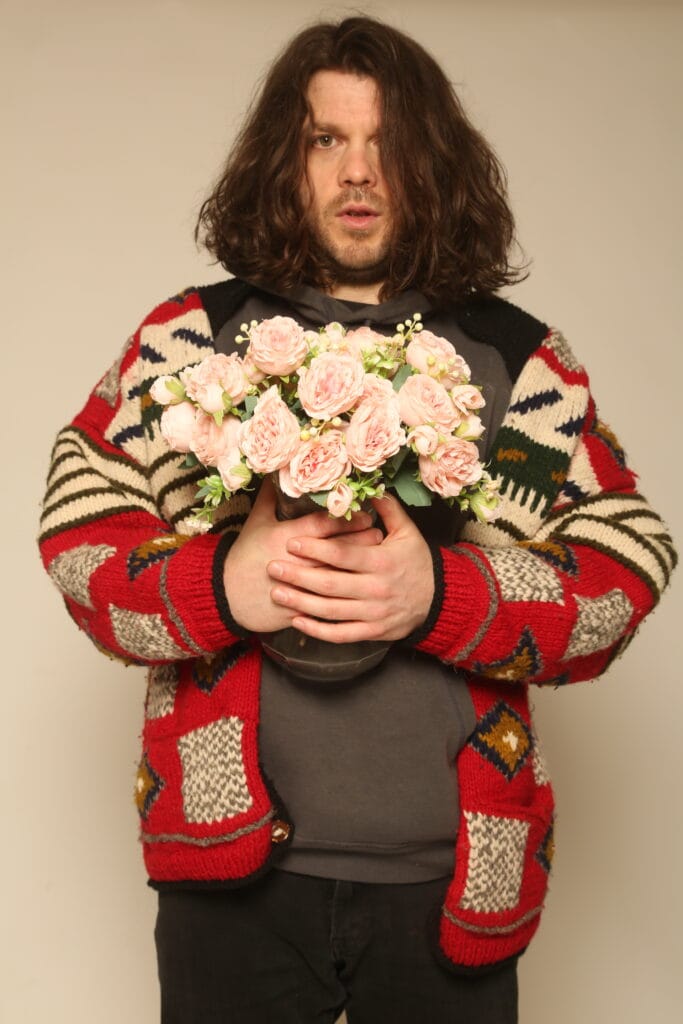
Adam kammerling
Adam Kammerling is an award winning poet, theatre maker and educator.
His most recent works include Seder, his debut poetry collection which was a finalist in the National Jewish Book Awards, Shall We Take This Outside, a three-person spoken-word/dance theatre show that toured nationally, and Inside!, a piece of poetry/rave theatre commissioned by Centrepoint and the Saatchi Gallery.
A highly experienced educator, he has created spoken word and theatre with emerging poets, musicians and circus practitioners at the Roundhouse, The Albany and Pentonville Prison.
Insta: @adam_kammerling
 Insert HTML here