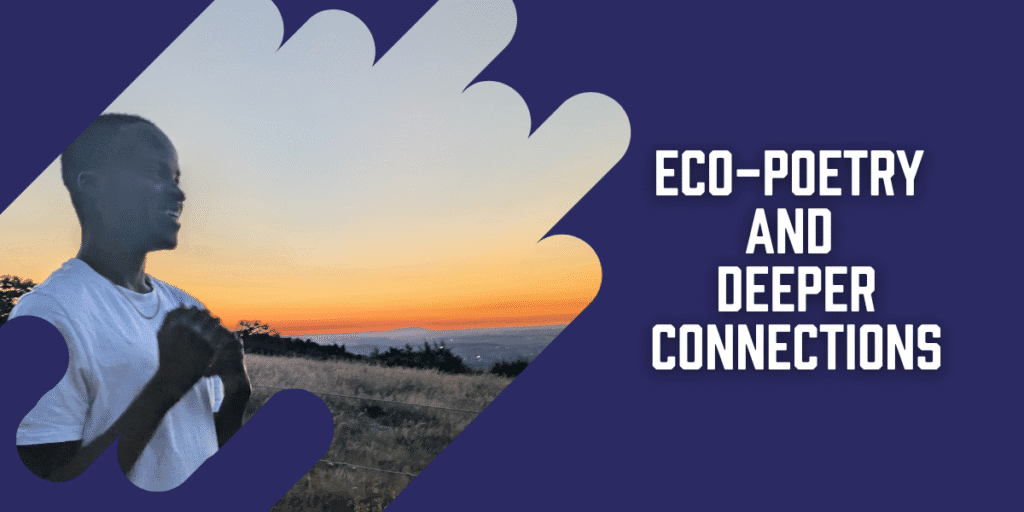
Since my time with Apples and Snakes at Acts of Imagination, The Power of Art to Create A Better World, I’ve been thinking about how poetry can help us listen better, and how art affirms that we are all connected.
The show began with a performance by musician Tainara Takua. Within her set, Tainara spoke about her indigenous Guarani Mbya background and the themes of nature, children and water woven within the lyrics of the songs she performed. I could not understand any of the words she sung, but I felt them. I could hear the river. I could see the children playing in the breeze.
Qadir Jhatial, an artist from Pakistan, took a seat at the long table on stage. After an exercise where the audience was asked to close their eyes and imagine a future where the land is respected and thriving together with communities, Qadir began to speak. He let the audience know that he would be speaking in the Sindhi language. There was no translation, and again I did not understand a word he spoke, but I could feel each one. His hands moved like waves as he spoke, painting in the air.
The conversation continued to flow. Another person came to the stage and this time they spoke in Portuguese without translation. I was seated at the table at this time. I shared that hearing this communication between different languages made me think of something that often comes into my head, which is that nature also has a language. I explained that when I was in Barbados in the last year, where my family is from, there was a moment when I felt like I could hear the birds clearer and the clouds felt closer. Sitting by the Caribbean Sea, it felt like the turquoise waters knew me. It felt like returning to see relatives who said ‘wow, you’ve grown’. The ocean did not speak with words but I felt that sense of kin when I sat listening to the tides. Amber Massie-Blomfield, the host, asked how we re-develop our ability to listen to nature and the person speaking in Portuguese replied with words that will stay with me. She said that it is not only about listening to who and what we understand, but listening when we do not understand.
Another person in the audience, who said she was from Pakistan, came to sit at the table. She spoke in English and told the story of a tree being cut down from outside of her office window. It looked like she was moved to the brink of tears telling the story of how she tried to save the tree and the grief she feels for her loss. Not just the loss of the tree but all of the various life forms which that one tree supported.
To listen to nature is to listen to what we might not understand. We know the name of a bird and their properties but does that mean we know that particular bird? Eco-poetry, similar to folktales, feels like a way of reminding myself that the bird also has an inner life, just like me. Even if some may think that is very woo woo, we can all do with making everyday life feel more magical.
Paying attention is something that has become more difficult with all of the ways we can distract ourselves. To hear a bird and to listen to a bird are two different things. I unconsciously hear birds throughout the day, but when I consciously take in the sunset, it feels like I am really listening to the birds. Although I do not know what they are communicating to each other, in choosing to still listen, there is a compassion that I feel towards those birds’ lives.
This is also true with our fellow human beings. Each person in that room had a story of their relationship to nature. When the people around the table communicated with each other in different languages, it did not feel like each one was listening in order to reply. It felt like we were all listening to listen and respect all of the voices. I believe that when we come together in this way, with our many backgrounds and walks of life, being willing to listen even when we do not initially understand, we can collaborate creatively, and find unique ways of working together, just like nature. This reminds me of a time when I collaborated with another poet to write a piece. Our styles of poetry felt like two completely different languages although we both wrote in English, but by working together we created a very powerful poem. Each of the other poets who came on stage at Acts of Imagination (Anneliese Amoah, Bhumika Billa, Eileen Gbagbo) also have their unique voice and styles, and all of our words wove together like different threads of a tapestry in the audience’s minds.
Consider, I used to think that writing poetry was a way for me to be understood. It was a way for me to say everything I wanted to say, ordering the words how I felt was best and even being able to use poetic devices like rhyme and rhythm to place more emphasis in different places. Now though, I think poetry is making me feel comfortable with not being understood straight away. I can write one poem and each person in the room can come up with their own meaning for it, even if I did not write it in the most abstract way. At the same time, each person who feels connected to the poem, feels that way because something within the poem connected to some part of them. This is similar to compassion and it is why I see poetry as a way to make people feel more connected and compassionate towards other people and the world around us, even with lives that seem very different to our own.
Poetry can seem like a very solitary process when we are writing on our own, but actually poetry is very much about our co-existence and being in relationship with one another. Listening beyond the words, relating beyond understanding and not understanding. Through compassion, which requires an opening heart and mind, I believe we will also have more capacity to understand one another.
So much of life is to do with being in relationship. We are always in relationship, not only if we are in a romantic relationship. As well as family, friends, communities and coworkers, we are also in relationship with nature, whether we are aware of this or not. Being conscious of our relationship with the nature around us isn’t just about understanding our impact on the environment (although that is important). It’s also about the sense of belonging that comes from this awareness. One of my favourite books I’ve read in the last few years is ‘Unearthed’ by Claire Ratinon. Claire shares with us that though there are many things in life that tell us we do not belong, the land wants to be relationship with us. Whether it’s mainstream media and headlines, hate crimes, faceless people on social media, policies and scandals, institutional discrimination, or bullying, nature always affirms to us that no matter who we are, on whatever land we are on, we are worthy of feeling like we belong. Living in the inner city, I’ve found that finding some way of relating to nature can really help with this sense of connection. I know that with soaring train prices, it’s hard for some of us to go to the countryside or explore different parts of the country. Often times urban nature can be overlooked, but instagram pages like @outsidewithlira remind us to look up and see the joy of the birds, to look out for the fluttering butterflies, and to keep our senses open to little moments of natural awe. This is a practice that can really help us with making wonder, joy and belonging a rhythm in life rather than something that we have to wait for. Community garden groups, nature walk events and composting workshops are also great ways to meet new people in a meaningful way. Loneliness is experienced by many people today, in cities too, and so we know that it is not just about not having people around us. Even though we live in a world that on the surface is more connected than ever before, the amount of loneliness suggests a deeper crisis of disconnection, further impacted by the closing of many third spaces (places other than home and work where people can gather and build their own sense of community).
I left Acts of Imagination feeling that eco poetry and any art form that explores our connection to each other and the environment, is a reminder that no matter how many things try to break us apart, we are all parts of this one great ecosystem. After the poems, the songs, the art, and the theatre, we must continue to listen, pay attention and act from this place of connectedness if we are going to each play our role in transforming the challenges and suffering we encounter in our more immediate communities, and in the wider world around us.
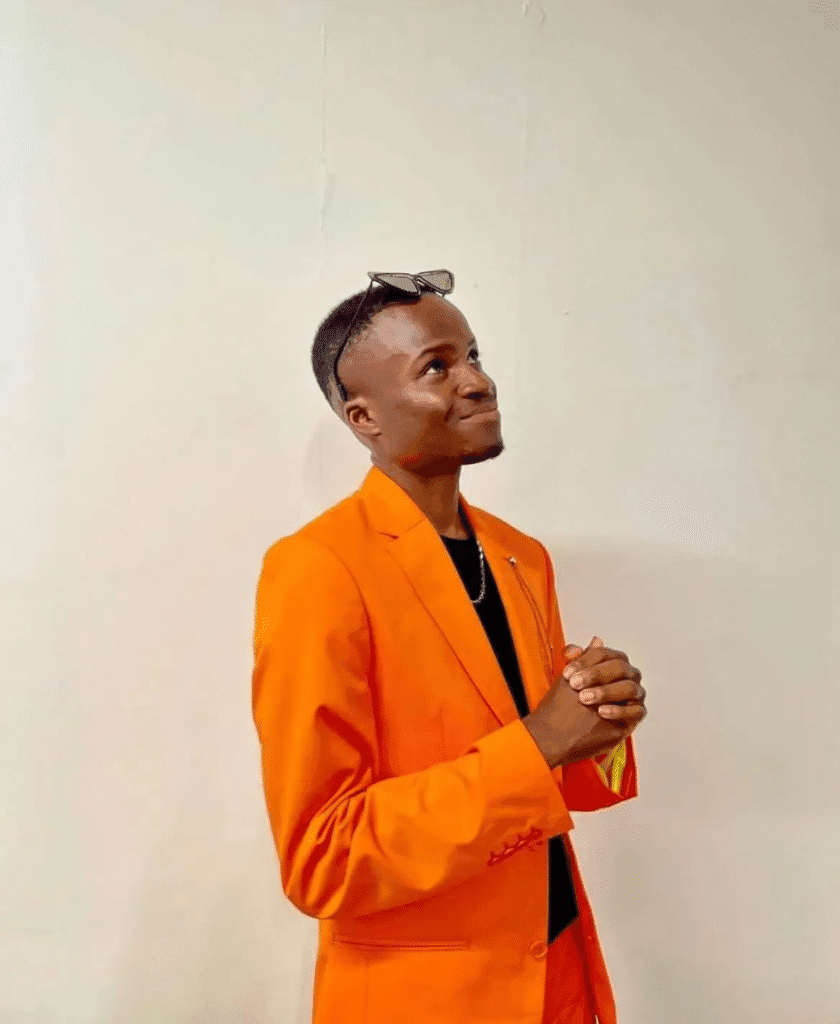
About Adjei Sun
Adjei Sun is a poet, artist, performer and facilitator. Themes of his work include nature, identity and mental health. Adjei has performed and spoken nationally and internationally including for Ted X, BBC World Questions, The World Expo and The Natural History Museum. Adjei has formerly been recognised as a BBC 1Xtra Future Figure for his work in communities using poetry and creativity to bring people together and uplift youth voices through his work in schools and communities
 Insert HTML here