I was twenty-one, a brand-new Editorial Apprentice at LeftLion Magazine, when I was first sent to cover a poetry gig at Nottingham Playhouse’s Neville Studio. My ‘career’ up until then had been a jumble of bar shifts, cleaning jobs, telesales patter, dealing cards at a casino, and working as a support worker. Suddenly, I was a journalist. At least, that’s what it said on paper. Me, a journalist! I could barely say it without laughing.
The LeftLion Literature Editor at the time, James Walker, handed me a commission to review a show by a spoken word collective called Mouthy Poets. I’d never heard of them, but I was hungry for anything and everything. Secretly, I’d already been scribbling away for years – poems on receipt paper during bar shifts, scraps of verse in staff rooms, email rap battles with telesales colleagues. I’d even dragged a mate to an open mic at Hotel Deux and nervously read out some lines of my own. So when this gig came up, I was intrigued.
That night, twenty-odd poets took turns stepping up to the mic, weaving in and out of each other’s work. Hip-hop beats stitched the evening together, with a flow of poetry that was equal parts raw, playful, and polished. The space buzzed. The words felt alive. At the end, a curly-haired woman in baggy jeans and trainers bounded onto the stage with a clipboard, inviting people to get involved with the collective. Her name was Debris Stevenson, the founder of Mouthy Poets and, though I didn’t know it yet, the person who would help to shape the next decade of my career.
Discovering the Collective
Friday evenings soon became sacred. I joined the collective, notebook in hand, free-writing in circles of poets who encouraged risk-taking and imperfection. We stood up, tried new voices, shared freshly written work on the spot. We mapped out showcases on giant sheets of paper, scrawling with Sharpies, testing out collaborations, making mistakes, laughing, and, without realising it, building friendships.
Mouthy didn’t just teach us to write; it taught us how to craft. We workshopped rigorously, giving and receiving feedback. We experimented with form and performance, exploring how movement, props, sound, and lighting could elevate a poem. We learned to think not only as writers, but as producers and educators.
And then came the visitors. Giants of the poetry world, Roger Robinson, Malika Booker, Hannah Silva, Dean Atta, Patricia Smith, Caroline Bird, who ran masterclasses, retreats, and workshops. We shared stages with them, exchanged ideas, and felt the impossible become possible.
One year, through a cultural exchange programme, we travelled to Karlsruhe, Germany, to collaborate with our sister collective, Löwenmaul (Lion Mouth). We wrote poems, took contemporary dance workshops, and swapped stories late into the night. Later, they came to Nottingham. It felt like poetry could take you anywhere.
From Mouthy to GOBS
As Mouthy alumni, many of us carried the torch. Some launched performance nights, others became Young Poet Laureates, festival organisers, or workshop leaders. I myself started being invited to perform and facilitate. For the first time, poetry wasn’t just a hobby, it was a vocation.
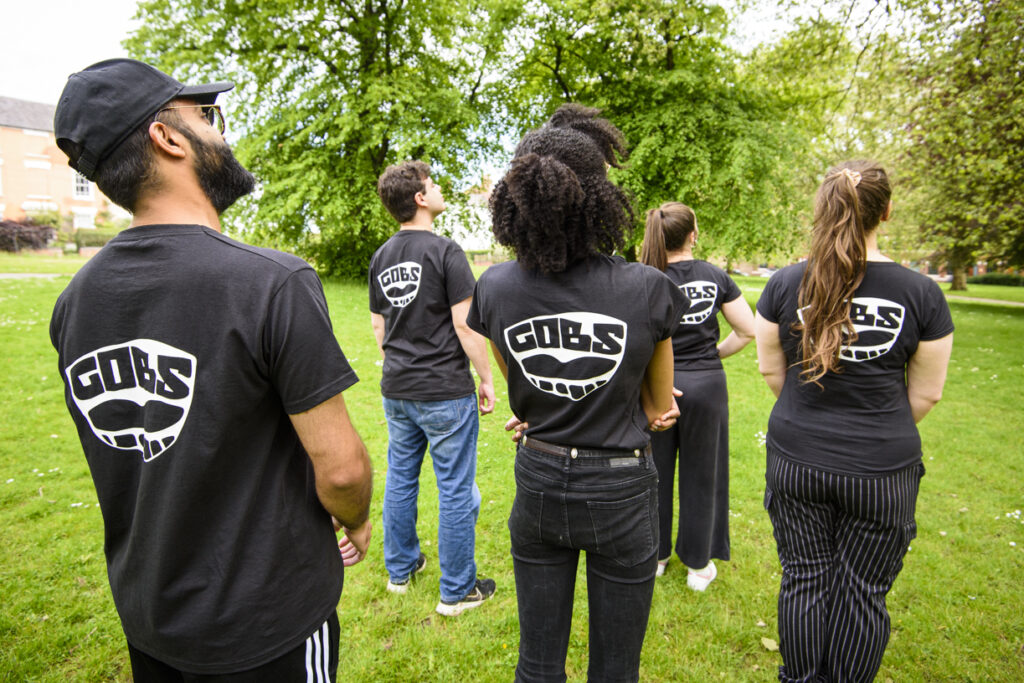
But collectives, like people, have lifespans. After a few luminous years, Mouthy disbanded. The scene, once electric, simmered down. By then I was Editor at LeftLion, my energy poured into producing a monthly magazine. Still, the seed had been planted. During an interview for a Writer-in-Residence role at Nottingham Trent University, I mentioned my dream of starting a new collective. Sandeep Mahal, then Director of Nottingham UNESCO City of Literature, lit up at the idea. To my amazement, I got the role. When the residency was over, NTU provided start-up funding for the beginnings of GOBS Collective.
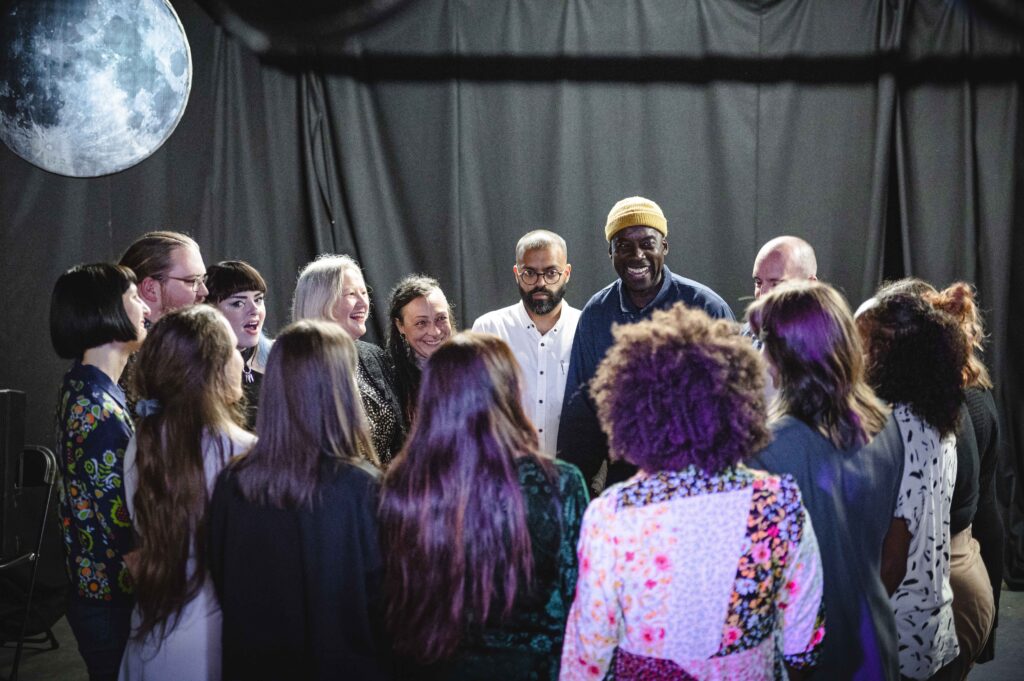
Side-by-side with the brilliant Ioney Smallhorne, supported and mentored by John Berkavitch, I launched a five-week education programme: recruiting new members, learning together about poetry, creating an anthology, and building towards a performance showcase. We managed two in-person sessions before the world shifted into lockdown. Suddenly, we were running everything online: writing workshops, rehearsals, feedback sessions. Later, we ran a second online cohort and eventually produced our first live showcases: Full Moon and Earth.
We’ve been lucky to have regular support from Apples and Snakes, who haven’t only provided funding but also advice, encouragement, and moral support. Their belief in us has helped GOBS grow into a sustainable, long-term presence in the city’s cultural landscape.

Finding Sustainability
Over time, we learned the importance of building a ‘spine’ of activity: the minimum heartbeat of the collective that could continue even without funding. That spine became four seasonal events, ranging from cosy winter pub socials to outdoor summer workshops, anchoring us through the year and celebrating the cyclical changes in nature. Around them, we could build more ambitious projects if energy and funding allowed.
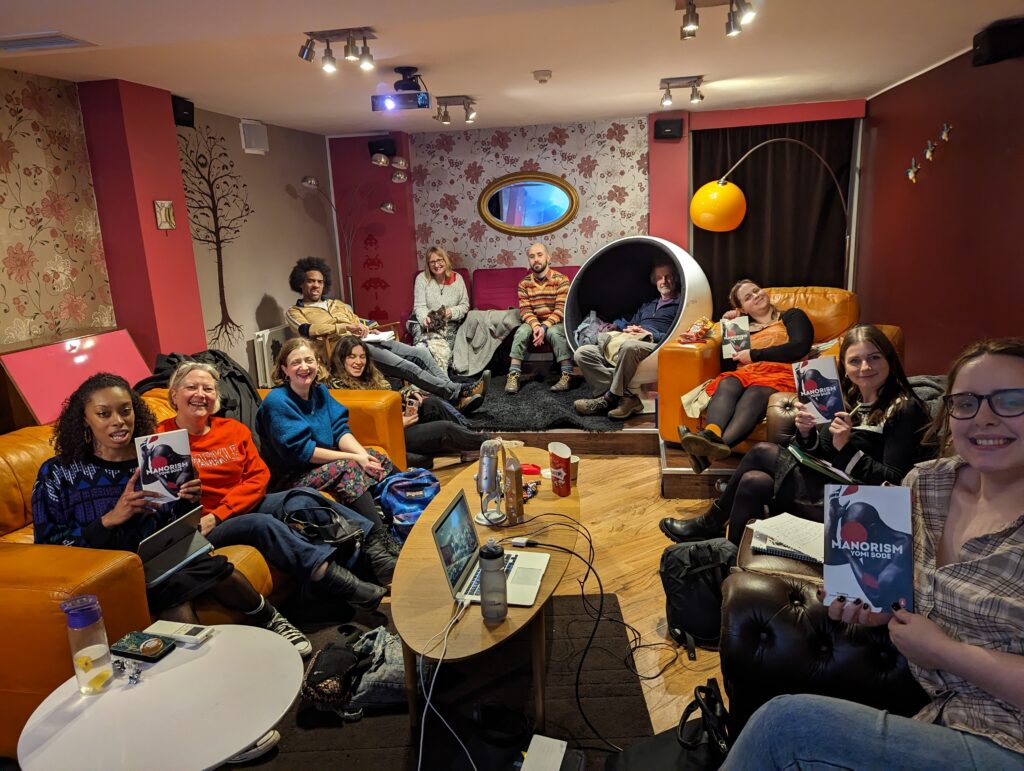
In creating sustainability, I’ve discovered the importance of considering how a collective can feed into individual creative practice. Ioney and I launched GOBS Poetry Book Club. It started as a way to finally tackle the unread stacks of poetry collections on our shelves, but quickly became a communal ritual. We met in venues like Mimm Studios, Broadway Cinema, and eventually found a home in Nottingham Central Library. We read aloud, discuss, debate, and write new work inspired by the month’s book.
Then grew another experiment: GOBS Sunrise Sessions. I’d always dreamed of being an early riser, catching the quiet magic of dawn, but never managed it alone. So I set up a regular Zoom space: I had to open the room, so I had to get up. Together, we breathe, stretch, free-write, and set intentions in rhythm with the moon cycle. It’s become not just a practice for me, but a shared ritual supported by GOBS member Sarah Wheatley, and an accountability anchor that links personal growth to communal creativity.
The rhythm of community
Running GOBS has taught me as much about sustainability as it has about poetry. Collectives thrive on energy, but energy alone isn’t enough, they need rhythm. A balance of push and pause. A structure that can withstand burnout and shifting circumstances.
For me, the rhythm of GOBS now echoes the rhythms of life and nature: seasonal events, lunar cycles, the daily rising of the sun. These rhythms don’t just sustain the collective; they sustain me. They remind me that poetry isn’t only about performance or output; it’s about presence, breath, and connection.
Because ultimately, GOBS isn’t just about poetry. It’s about creating a sustainable space where voices can emerge, collide, and resonate. A space that gives what Mouthy Poets once gave me: not just words, but the courage to use them.
Moving forwards after an incredible 2025
This past year – our fifth year – has felt like a gentle widening of the circle. We’ve taken GOBS into new spaces, running workshops with a youth centre, a school, and a local charity supporting people with brain injuries. We’ve worked closely with Shadow Poets in this, creating space for others to learn how to deliver work, to hold space, and to build confidence doing so. We’ve also spent time sharing skills within the collective, running masterclasses in workshop facilitation and event hosting, so that the skills, energy and responsibility don’t sit with one person alone.
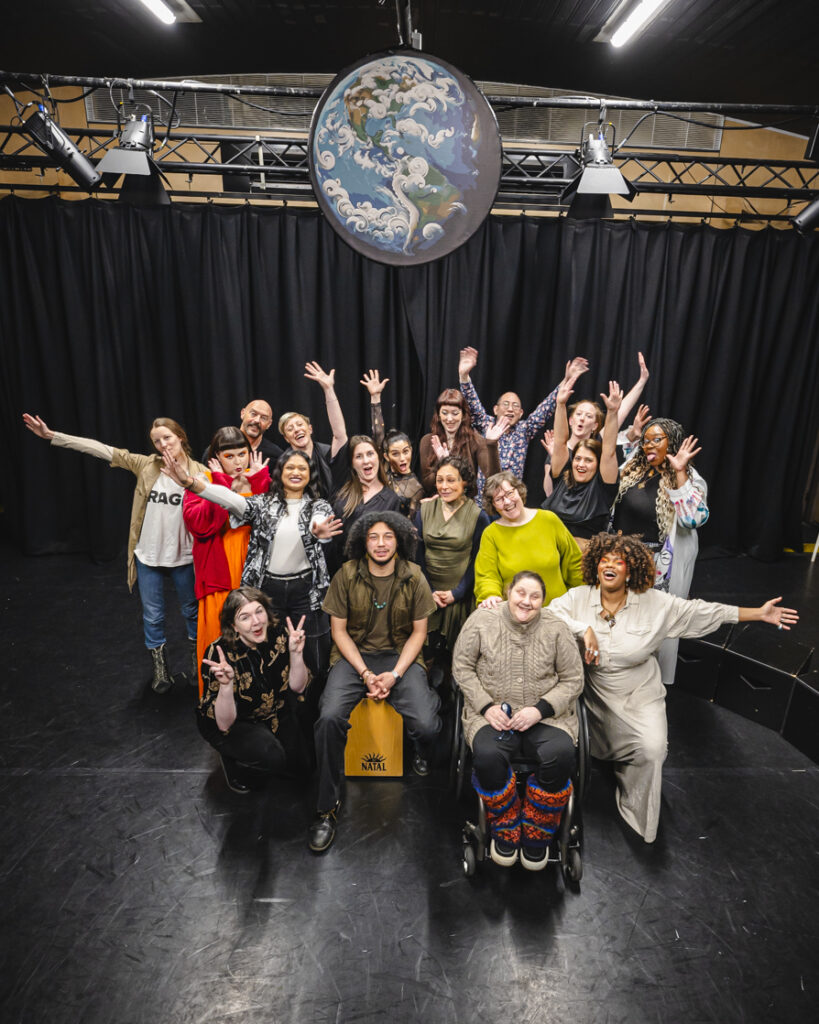
One of the real highlights was spending time together at Arvon: sixteen of us eating, walking, writing, dancing, and learning in the countryside alongside Anthony Anaxagorou and Vanessa Kisuule. Following that, publishing masterclasses with Bad Betty Press. All of which fed directly into Constellation, a performance showcase where sixteen individual poetry pamphlets were launched at Waterstones Nottingham. None of this would have happened without the care and encouragement of Apples and Snakes.
As we look ahead, we’re trying to loosen our grip a little by reshuffling our organisational structure. We want to let the Collective lead itself more fully, to share power, trust the group, and allow things to grow in unexpected directions. We want to tend to the partnerships we already have, and slowly reach outwards too, perhaps towards other collectives across the UK, and maybe beyond, learning from each other, swapping stories, seeing what might be possible together.
In January 2026, GOBS will come together to reflect on the year that’s just passed and to imagine what comes next: we’ve been gathering and holding onto the ideas we’ve heard from our members, and are ready to play. We’re stepping into the next year with curiosity, compassion, and a shared intention to keep wellbeing at the heart of everything we do. It’s a tricky thing to build sustainability in the current climate, but we’ve now created a community that I’m sure will grow into pathways we can’t even imagine yet.
Follow: gobscollective.org
About Bridie
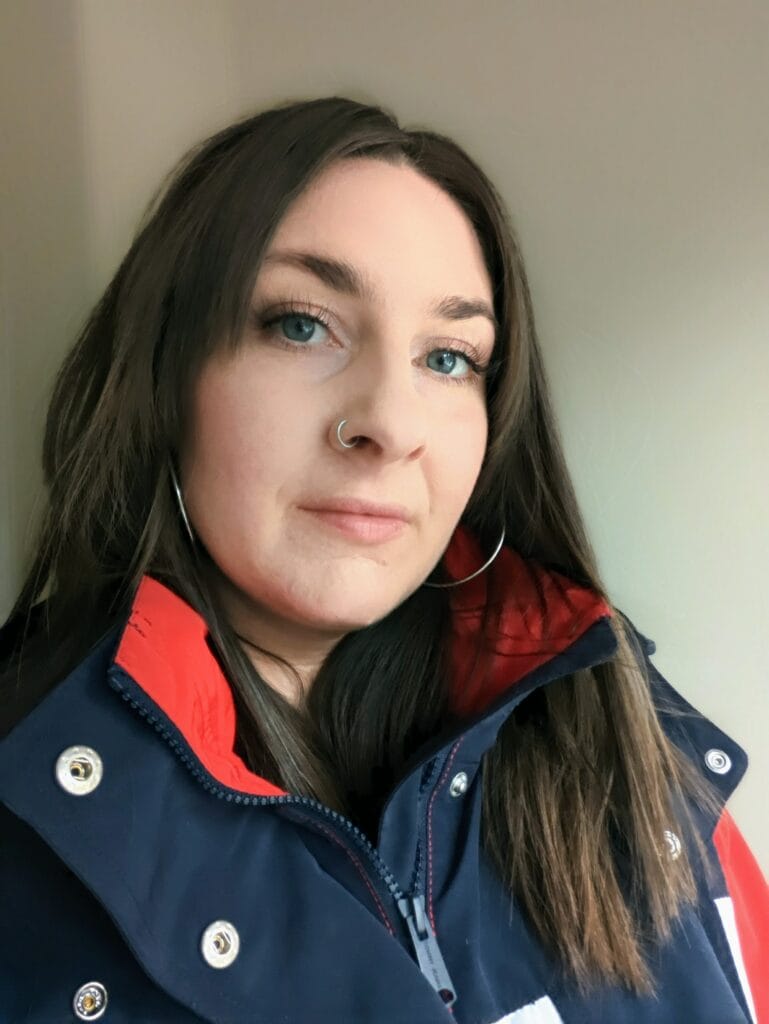
Bridie Squires is a writer, performance artist and producer from Nottingham. Founder and Director of GOBS Collective, her work spans across poetry, playwriting and journalism, and has been featured by BBC Radio 4, BBC Sounds and LeftLion Magazine. She has performed alongside Holly McNish, Lemn Sissay and Linton Kwesi Johnson, and has appeared at We Out Here festival. Her debut collection Duck on Bike was self-published in 2023 and her one-woman shows Casino Zero and Chaos Casino premiered at Nottingham Playhouse in 2023 and 2025 respectively.
Follow: bridiesquires.com | @brizzaling
 Insert HTML here